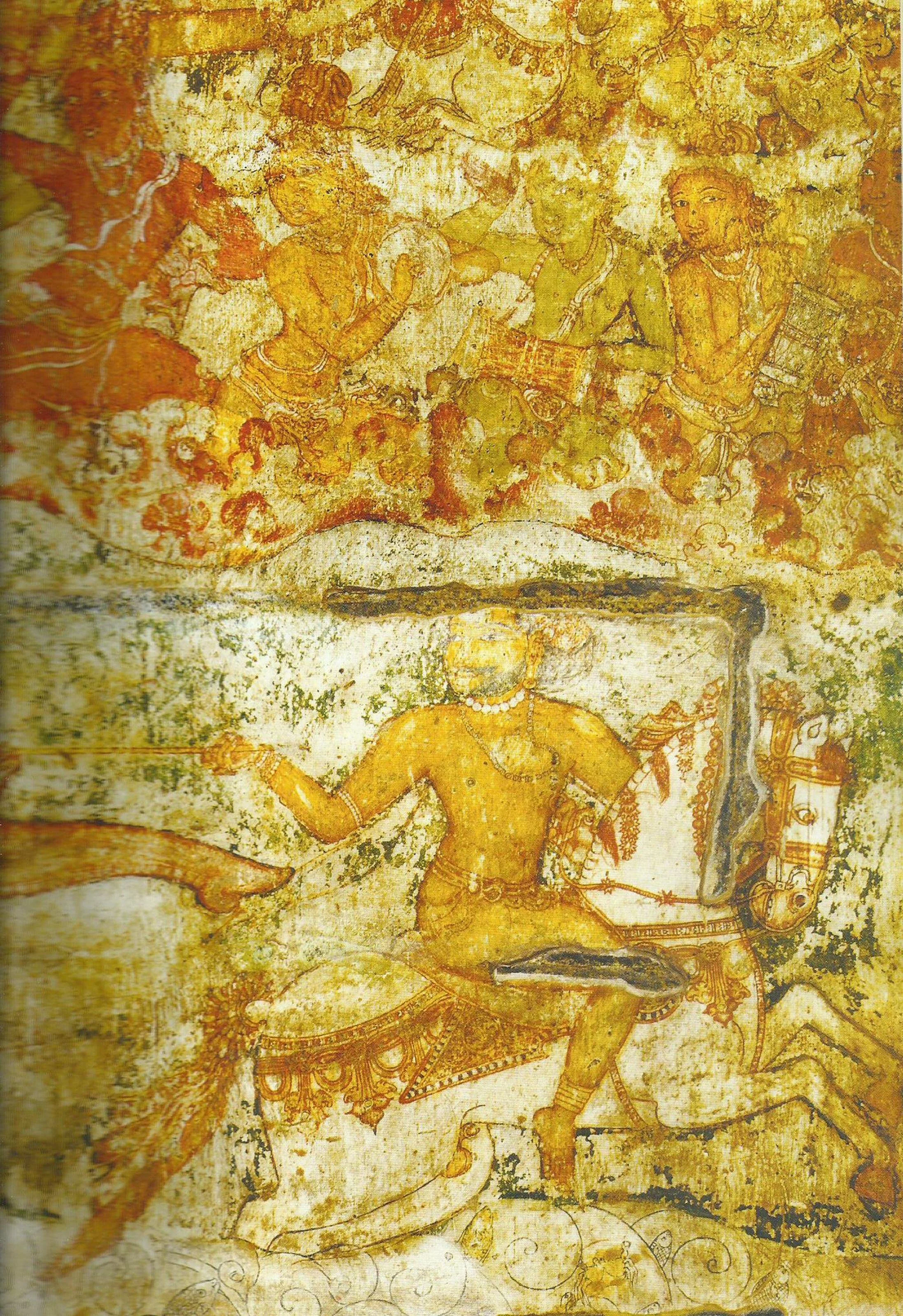
THE MERCHANT PRINCES OF THE INDIAN OCEAN
THE HOUSE OF ALAKĒŚVARA
(c. 1300 – 1505 CE)
The Heritage of the Chera Maritime State and the Stand for Regional Trade Autonomy
By the late 13th and early 14th centuries, during a period of intense political fragmentation and hyper-competition across the Indian Ocean, the House of Alakēśvara migrated into Sri Lanka . In vernacular rock inscriptions (such as the Niyamgampaya rock charter) and early prose chronicles, the lineage was recorded by its ancestral title, Alagakonara. This migration was driven by macro-regional disruptions in South India caused by the early waves of the Delhi Sultanate's expansions, prompting elite trading houses to shift their central offices and liquid assets to the secure maritime sanctuary of Sri Lanka's southwestern coast.
The family emerged from a hybrid structure of trans-oceanic commerce, sophisticated naval military organization, and courtly politics. The original etymology reflects an elite merchant background: Alaga translates to the god Kuvera (the lord of wealth), and Konar denotes a chief, leader, or protector. As they executed a historic dynastic merger at Raigama by marrying directly into the established, solar-allied Giri Clan, their Sanskritized courtly title—Alakēśvara ("Lord of the Abode of Wealth")—became the permanent, sovereign signature of the dynasty. This fusion of South Indian mercantile wealth and ancient cosmic legitimacy transformed them into the true military and administrative power behind the Sinhalese throne, holding the supreme title of Adigar (Chief Minister).
Unlike purely territorial feudal nobility whose authority depended solely on agrarian landholding, their power was based upon control of trade routes, customs taxation systems, and coastal defense along the valuable southwestern corridor. They established a vertical monopoly over high-grade wild cinnamon (Cinnamomum verum), turning the southwestern coast into a commercial tollbooth
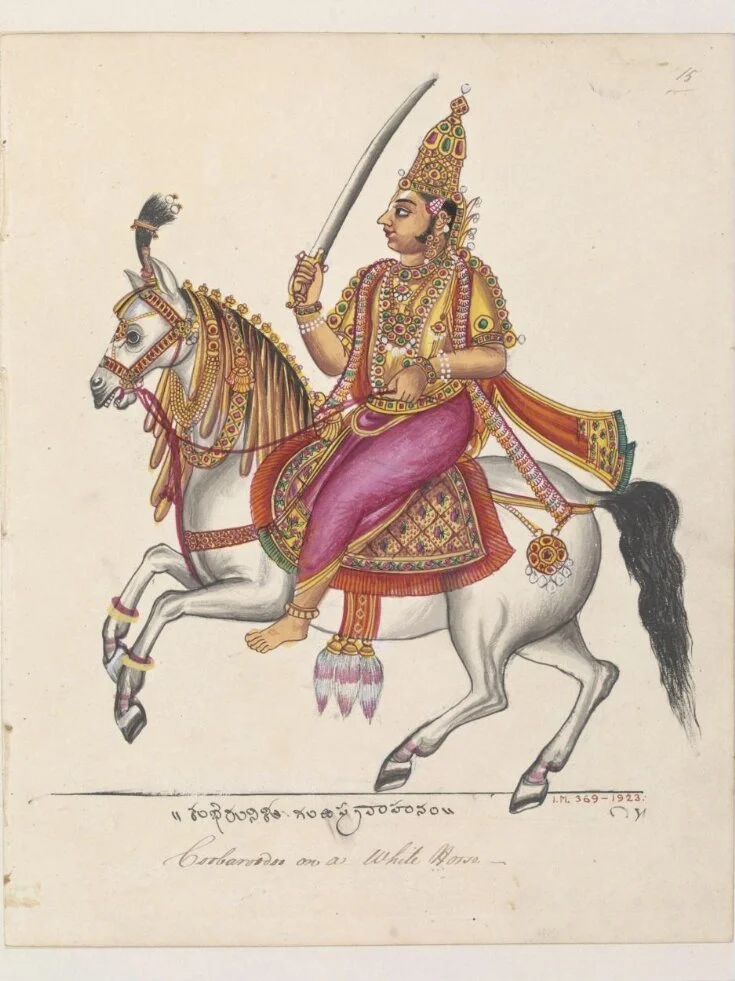
Kubera, the God of Wealth and Guardian of the North, Riding on a Horse, c. 1825. Gouache on watermarked paper, Trichinopoly (Tiruchirappalli), South India. Victoria and Albert Museum, London, Accession No. IM.369-1923. Image courtesy of the Victoria and Albert Museum, London.The Chera Kingdom Legacy: Roman and Chinese Global Arbitrage
The institutional capacity of the House of Alakēśvara was directly derived from its deep ancestral roots within the ancient Chera Kingdom (Cheramalam) one of the three crowning Tamil dynasties of classical South India. The Cheras were historically unique; their entire economy was an outward-facing maritime machine that controlled the Malabar Coast (modern-day Kerala), the definitive nexus of the spice route.
The historical and economic significance of the Cheras was defined by a centuries-long infrastructure of high-tier global arbitrage:
The Classical Greco-Roman Conduit: Long before their migration to Sri Lanka, the clan's ancestors directed the legendary port emporium of Muziris. Operating as a primary global trade hub, it integrated directly with the Roman Empire via the Red Sea fleets of Ptolemaic and Imperial Egypt. The Cheras exported massive volumes of Malabar black pepper, Malabathrum, fine cotton textiles, pearls, and premium gemstones (specifically high-grade beryls from the interior Padiyur mines). In return, they extracted staggering wealth from Rome, as evidenced by the vast hoards of Roman gold coins (Aurei) and silver denarii uncovered throughout their historical territories, paired with direct mentions in the works of Pliny the Elder and the Periplus of the Erythraean Sea.
The Sino-Indian Exchange: Simultaneously, the Cheras maintained an advanced, direct maritime pipeline with Han, Tang, and Song Dynasty China. Operating long-distance merchant guilds (such as the Ayyavole Five Hundred and the Manigramam), they exchanged South Asian spices and western goods for Chinese silks, fine porcelain, and high-purity metal bullion.
When the House of Alakēśvara transitioned its core operations to Sri Lanka, they did not arrive as simple refugees; they brought an inherited, reference-grade institutional blueprint of global trade navigation, guild alliances, and naval fortification that had successfully interacted with world empires for over a millennium. They re-deployed this identical macro-economic engine along the southwestern coast of the island.

Personification of India. Roman mosaic, early 4th century CE. Villa Romana del Casale, Piazza Armerina, Sicily, Italy. Photograph by Jerzy Strzelecki, via Wikimedia Commons (CC BY-SA 3.0).
The Ming-Kotte War (1410–1411): Resistance to Chinese Hegemony
One of the most extraordinary episodes in South Asian history unfolded when the Alakēśvara court directly challenged the global ambitions of Ming China. During the epic voyages of the Ming Treasure Fleets, the Yongle Emperor deployed Admiral Zheng He with an overwhelming naval armada to establish absolute political tribute and commercial dominance over the chokepoints of the Indian Ocean.
The Mechanics of the Conflict
The Alakēśvara court, operating from their highly fortified maritime centers, recognized that the Ming Empire's intervention was an immediate challenge to their sovereign trade model. The dynasty was immensely wealthy, operating a state-backed commercial monopoly over southwestern coastal ports that controlled the supply of cinnamon, gems, and pearls to Venice, Mamluk Egypt, and the Far East. Surrendering to the Ming tribute system meant bowing to a foreign superpower's terms, which would disrupt their independent customs tariffs on international shipping.
When Admiral Zheng He landed with a massive contingent, the ruling patriarch, Vira Alakēśvara, executed an aggressive tactical maneuver. He lured Zheng He and 2,000 Chinese troops overland into Kotte, attempting to cut them off from the Chinese treasure fleet anchored at Colombo. In a high-stakes counter-assault, Zheng He bypassed the main army and raided the capital city directly, capturing Vira Alakēśvara, his family, and principal officials.
The Geopolitical Legacy and Structural Continuity
While Chinese records in the Ming Shilu note the extraction of the Alakēśvara court to Beijing, the ultimate geopolitical resolution highlights the family's enduring systemic impact on the state:
The Infrastructure of a Unified State: The supreme defensive citadel of Jayawardenapura Kotte—engineered and constructed by Nissanka Alakēśvara explicitly to secure the western coast—proved its architectural brilliance. It survived the superpower conflict entirely intact. It was this exact fortified capital that provided the secure, unassailable administrative base from which the nation was unified, launching the last great golden age of independent Ceylonese culture before the colonial era.
Defiant Autonomy: By aggressively confronting the Ming armada, the Alakēśvara administration established a precedent of uncompromising resistance to external maritime dominance. Though the conflict resulted in a temporary loss of leadership, the structural fortress they left behind became the permanent anchor for the island's sovereign survival.
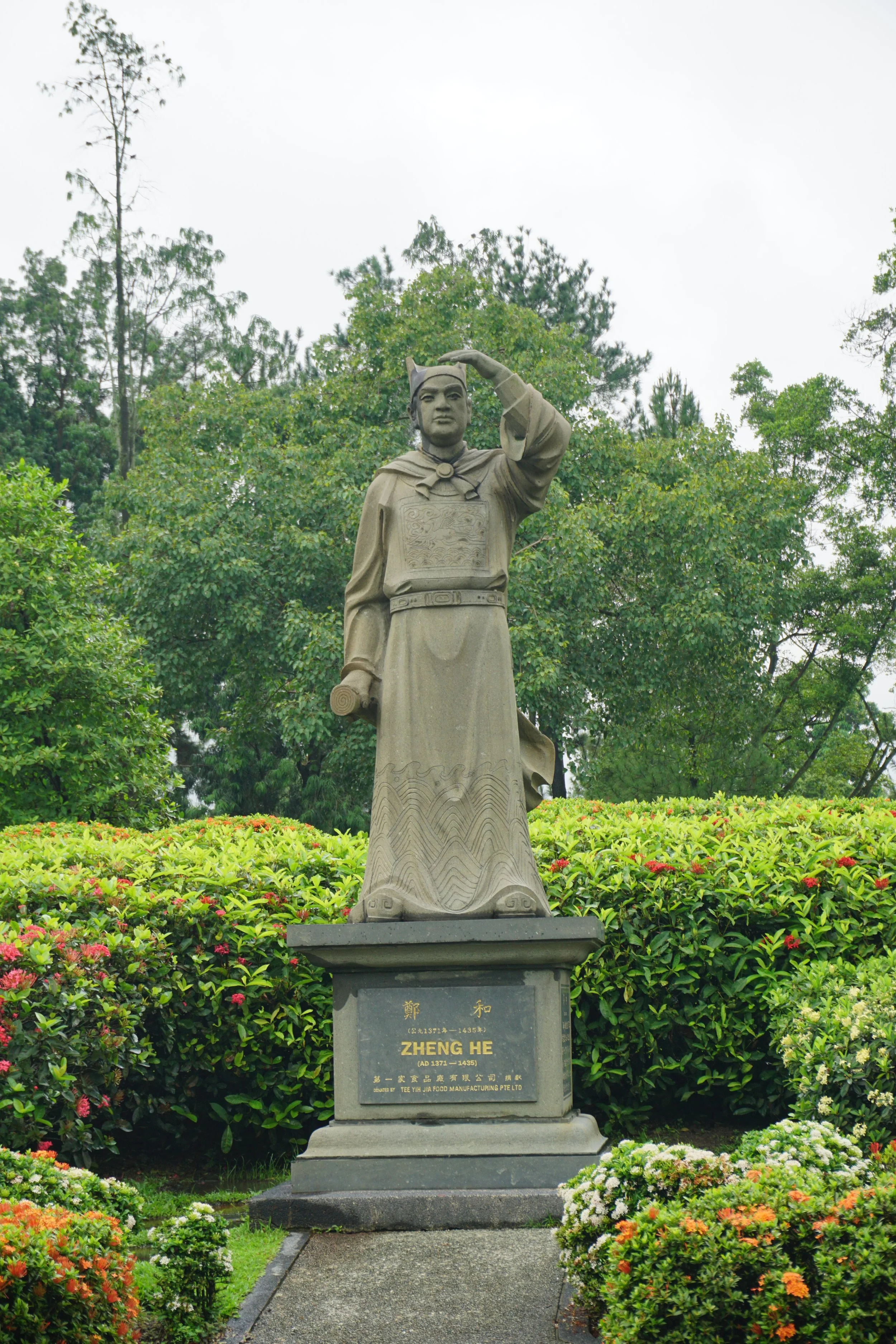
Statue of Zheng He (1371–1435), Chinese Garden, Singapore. Photograph by Anandajoti Bhikkhu, via Wikimedia Commons. Licensed under Creative Commons Attribution 2.0 (CC BY 2.0).The Golden Age (1412–1505 cE): The Southward Dispersion & Coastal Land Grants
Following the weakening of direct Alakēśvara political dominance and the unification of the island under the Kotte crown, branches of the southwestern aristocracy dispersed outward from the immediate political center. This movement was a calculated realignment, focusing on the long-term preservation of hereditary lineage assets beyond the volatile imperial capital.
The aristocracy migrated southward, anchoring their positions through royal land grants engraved on copper plates, known as Sannas, across the primary maritime asset zones and trading estuaries of the southwest coast. Historical traditions and genealogical compilations connect the ancestral branches of the de Alwis family directly to these southwestern coastal grants, establishing an unbroken territorial footprint across Moratuwa, Panadura, Bentota, Kalutara, and Pitiwala. Through these Sannas endowments, the lineage successfully converted its medieval merchant-kingship prestige into legally secure, intergenerational landed real estate along the coast.
The Realignment: Dispersal and Preservation
The period following the Ming–Kotte War (1411) marked a seismic shift for the Alakēśvara house. Facing a loss of absolute ministerial power at the capital, the family initiated a Southward Dispersion. This was not a flight of refugees, but a planned strategic retreat by the noble class to secure the family's long-term survival.
Geographic Relocation: Branches of the aristocracy migrated from the volatile capital region of Kotte toward the southern maritime districts, specifically anchoring their influence in Pitiwala (near Bentota-Elpitiya), Kalutara, and Moratuwa.
The Sannas System: To codify their status in these new domains, the family secured Sannas (royal land grants) from the Kotte crown. These copper-plate inscriptions provided legal permanence to their landed estates, protecting them from arbitrary royal seizure.
Ancestral Registry (Vasagama): As they dispersed, they utilized the Vasagama system traditional house designations to ensure their historical prestige remained recognized. Titles like Alahakoon (a linguistic evolution of Alagakonara) and Wijesiriwardana served as invisible markers of their royal ministerial lineage, allowing the family to maintain a social hierarchy that survived the political instability of the 15th-century Kotte succession.
The Role of the Sannas Chief Registrars
The family's structural continuity during this century of realignment was managed by a specialized class of ancestral scribes—the Sannas Chief Registrars.
Fiduciary Custodianship: These scribes were responsible for the "bureaucratic documentation" of the family's assets. They maintained the master records of the family’s landed portfolio across the southwestern corridor.
Insulation Strategy: By treating land titles not just as property, but as dynastic institutional assets, the Registrars ensured that the family's titles remained legally enforceable across multiple shifts in power. This administrative continuity allowed the family to emerge from the Kotte period as a landed aristocracy, setting the stage for their later transition into the "Merchant Barons" of the British colonial era.
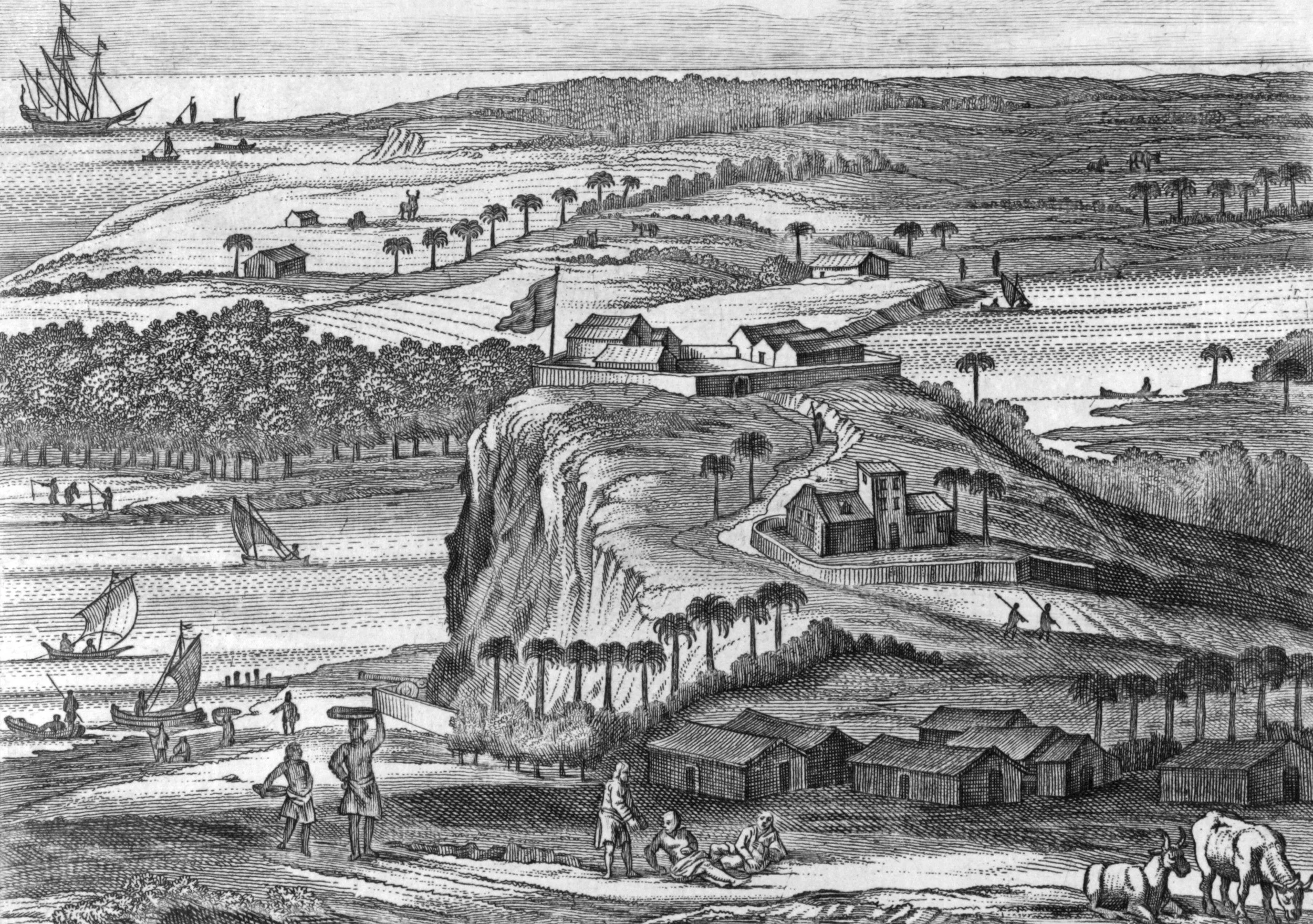
The Fortress of Kalutara, Sri Lanka. Engraving published in Philippus Baldaeus, A True and Exact Description of the Great Island of Ceylon (1672). Reproduced via Alamy Stock Photo (Image ID: 2Y5959P).Key Figures & Statesmen
-
The dynasty’s defining premodern statesman, military master, and architect of statehood. Holding the sovereign title of Prabhuraja, he engineered and constructed the fortified capital of Jayawardenapura Kotte between 1370 and 1385. Erected strategically amid the deep marshes and waterways of the Diyawanna basin near modern Colombo, his stone military stronghold was built explicitly to repel northern military expansions, protect southwestern agrarian assets, and centralize the commercial command point of the island’s maritime corridor.
-
The younger brother and chief operational officer of Nissanka Alakesvara. Managing the family office's rapid mid-14th century territorial consolidation, he systemized low-country tax and land-revenue protocols. By converting local trade rents into direct liquid capital, he financed the massive foreign mercenary regiments necessary to insulate and defend the Kotte-Raigama trading network.
-
The sovereign warlord who personified the house at its absolute zenith of independent geopolitical power. His unyielding refusal to surrender autonomy over the island's spice roads led directly to the historic Ming–Kotte War. Despite his tactical capture by Admiral Zheng He’s surprise terrestrial raid and subsequent transport to Beijing as a state captive, his built infrastructure remained so critical that the unified crown was permanently established within the walls of Kotte.
-
The early ancestral scribes and lineage gatekeepers who coordinated the bureaucratic documentation of the low-country estates. Operating within the Kotte court administration, they ensured that the family's territorial titles across Moratuwa, Panadura, and Bentota were recorded with absolute legal permanence, shielding their land portfolios from future dynastic shifts and external disruptions.
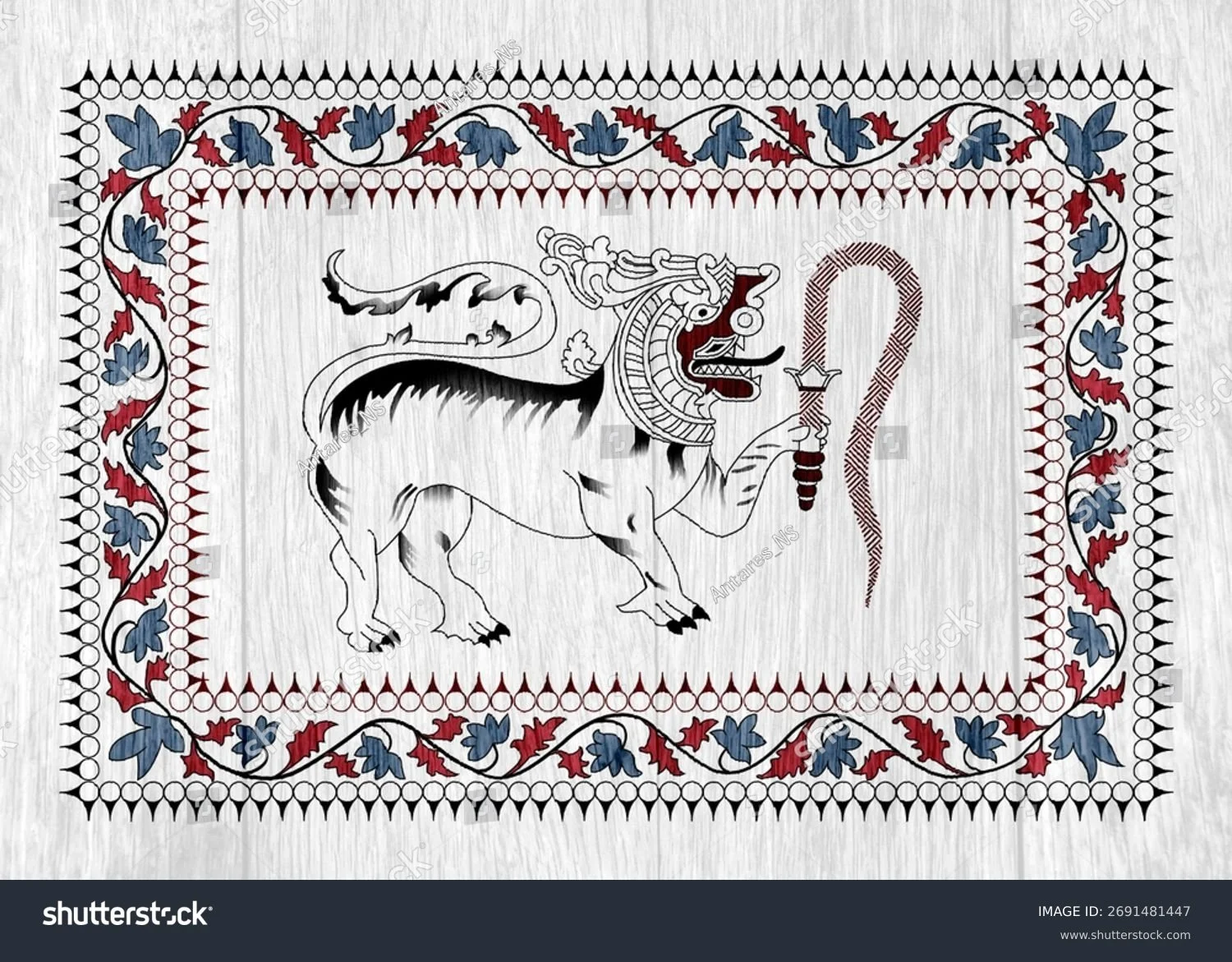
Flag of Sri Jayawardenepura Kotte, , c. 1412–1597. Digital illustration. Shutterstock, Image ID 2691481447.